First Assist
Awarded amount: $187,500 (1-year contribution)
Location: National project
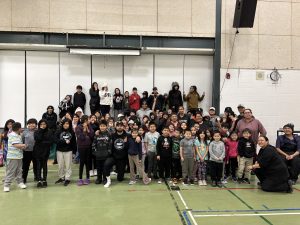
First Assist was founded on a powerful vision, that all Indigenous youth should have the opportunity to succeed in school, feel proud of who they are, and build a hopeful future. Created by former NHL player John Chabot from Kitigan Zibi, First Assist uses sport as a way to motivate students, strengthen wellness, and reconnect youth with culture and community.
Across many First Nations communities, young people continue to face barriers rooted in the intergenerational impacts of the Residential School system. Understanding these realities, First Assist works in partnership with Elders, Survivors, educators, families, and community leaders to create a culturally grounded approach to learning. Youth must attend school to participate in programming, helping improve attendance and engagement while strengthening relationships between students and school staff.
With support from Future Generations Foundation, First Assist has been able to stabilize long-standing programs and expand its national education and wellness programming across several First Nations communities including Lac Brochet (Manitoba), Grassy Narrows (Manitoba), Chesterfield Inlet (Nunavut), and Teslin Tlingit Nation (Yukon).
Funding helped strengthen staffing capacity, provided consistent coaching and mentorship support, and deepened engagement with families and schools. First Assist now also offers youth-focused leadership development, traditional health teachings, and on-the-land activities that encourage intergenerational learning and knowledge-sharing.
Their programming is rooted in five pillars: Education, Sport, Health, Capacity Building, and Culture. On‑ice and off‑ice learning blend with teachings from Elders, traditional health practices, and activities such as fishing, canoeing, and on‑the‑land knowledge-sharing. Parents and grandparents join in as helpers, mentors, and celebrators of youth achievements, creating powerful intergenerational connections.
By combining academic support with sports and cultural mentorship, First Assist is helping youth achieve in school while reconnecting with identity and community. Thanks to FG Foundation’s funding First Assist is providing transformative experiences that promote resilience, confidence, and long-term success in school and life.
You can learn more about the work we helped support in Grassy Narrows by watching this short video.
To learn more about how we support First Nations organizations and communities in advancing community-led initiatives, cultural revitalization, education, healing, and well-being, visit our Organizational Funding Program page.
Délı̨nę Got’ı̨nę Government
Photo: Adam Combs, courtesy of FNEF
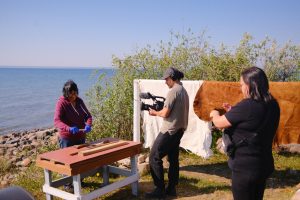
The Délı̨nę Got’ı̨nę Government is working to protect and revitalize the Sahtúot’ı̨nę language through their “Next Generation” project. Recognizing the urgent need to preserve the voices, stories and knowledge of fluent Elders, the initiative brings together Elders, survivors, youth, and community members to record, translate, and share traditional teachings for future generations. At its heart, this work is a response to the ongoing effects of residential schools, which disrupted the natural transfer of language and culture between generations.
Using land-based gatherings, recordings, and innovative tools such as digital archives and interactive “language clouds,” the project is creating a living repository of Sahtúot’ı̨nę knowledge. Elders and intergenerational survivors play central roles, offering their wisdom, guiding cultural and spiritual teachings, and helping shape educational resources that preserve language and traditional ways of knowing. Community members are also trained as transcriptionists and audio technicians, ensuring the work remains rooted in Délı̨nę while building local skills and capacity. The recordings and language resources are being integrated into local school curricula, supporting both formal education and lifelong learning.
While centred in Délı̨nę Got’ı̨nę territory, the project’s impact extends across the Sahtú region, benefiting communities including Délįnę Dënë, Tulita Dënë, Fort Good Hope Dënë, Colville Lake Dënë, and Sahtú Métis communities. Together, these communities represent approximately 3,000 people who stand to benefit from the preservation and revitalization of their shared language and cultural knowledge. By creating resources that can be accessed by students, educators, and community members throughout the region, the project is helping ensure that Elders’ teachings remain available for future generations.
Beyond preserving language, the project recognizes the vital connection between culture, identity, and well-being. By reconnecting youth with their language and heritage, the initiative helps strengthen cultural pride, resilience, and a sense of belonging. Through this work, Délı̨nę is reconnecting generations, rebuilding cultural identity, and responding directly to Truth and Reconciliation Commission Calls to Action that prioritize language revitalization. The Next Generation project represents a powerful step toward healing, resilience, and cultural resurgence in the Sahtú region.
Continued Impact
The success of the Next Generation project led to continued support from the Future Generations Foundation. In 2025–2026, Délı̨nę Got’įnę Government received an additional $121,000 for its Community Connections Project, an initiative designed to deepen intergenerational relationships while advancing language revitalization, cultural resurgence, and community healing.
Building on the foundation established through language preservation efforts, the Community Connections Project brings youth and Elders together through Dene Kǝdǝ́ language activities, storytelling, traditional drumming, hand games, and community gatherings. A central focus of the project is the restoration of the local cemetery, creating opportunities for survivors, families, and youth to honour community members affected by residential schools and the Sixties Scoop. Through the restoration process, youth learn about their community’s history, traditional stewardship practices, and the resilience of their people while helping preserve an important cultural and spiritual space.
The project also supports ongoing youth drumming programming, where participants learn to create traditional drums, practice songs, and engage in cultural teachings delivered in Dene Kǝdǝ́. In addition, an annual hand games tournament brings together communities from across the Sahtú region, strengthening cultural pride, regional connections, and the transmission of traditional knowledge. Together, these activities foster belonging, reinforce cultural identity, and create meaningful opportunities for healing across generations.
Through these two successive investments, Délı̨nę Got’įnę Government has demonstrated a sustained commitment to ensuring that language, culture, and community knowledge continue to thrive for future generations.
These projects were supported through FG Foundation’s Organization Funding Program. To learn more about how the program supports support community-driven programs that strengthen education, healing, language, culture, and reconciliation visit our Organization Funding Program page.
Northern Village of Beauval
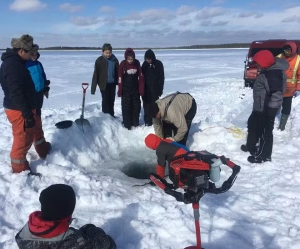
The Northern Village of Beauval, led by a fully Indigenous leadership team, is dedicated to preserving its cultural heritage and promoting language revitalization through the Culture, Language and Sport Project. This initiative focuses on residential and intergenerational survivors, fostering community and a strong sense of identity among the village’s 685 residents, which include Métis and members of the Canoe Lake First Nation. The project prioritizes inclusivity, encouraging all community members, including Elders, to engage in cultural and language activities.
Through workshops and learning activities with traditional knowledge keepers, the project ensures the preservation of Indigenous languages and customs. Recognizing the lasting effects of residential schools, it aims to rebuild family connections and instill pride in cultural identity. Participants will engage in practices like hunting, fishing, cooking, and berry picking, fostering a deep connection to their heritage.
The FG Foundation has been instrumental in enabling the Culture, Language and Sport Project to thrive, ensuring the continued revitalization of the community’s cultural traditions for future generations.
Eskasoni Band Council
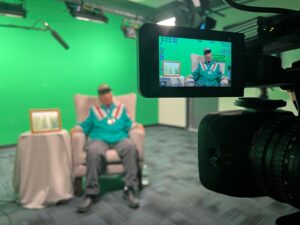
The Eskasoni Band Council has launched the Language Reclamation and Revitalization Program to preserve and revitalize the Mi’kmaq language. This initiative makes the language more accessible to all community members and responds to Canada’s Truth and Reconciliation Commission (TRC) and its 94 Calls to Action.
A key part of the program involves translating the TRC and the 94 Calls to Action into Mi’kmaq and working with elders to capture the oral histories of residential school survivors in their first language. These stories are recorded through video and audio, preserving them for future generations.
Participants also receive mentorship in video editing, studio production, and media skills, gaining hands-on experience while helping safeguard cultural knowledge. An audio/video editor has enhanced the quality of these recordings for wider community sharing.
Pekuakamiulnuatsh Takuhikan
Pekuakamiulnuatsh Takuhikan, based in Mashteuiatsh, Québec, is leading the Boussole des compétences program, which supports First Nations youth aged 18-30 in re-engaging with education and employment. The program offers 294 hours of training over 12 weeks, focusing on essential skills like communication, problem-solving, and cultural identity.
In partnership with Collège d’Alma, the program incorporates Innu culture and history, helping youth connect with their heritage and learn about the impact of residential schools. This approach builds confidence and prepares participants for the workforce.
The program has successfully supported two cohorts, with plans to serve more youth in the future. With the support of the FG Foundation, Boussole des compétences helps youth return to school, gain job skills, and strengthen their cultural identity.
Kenhté:ke Seed Sanctuary & Learning Centre
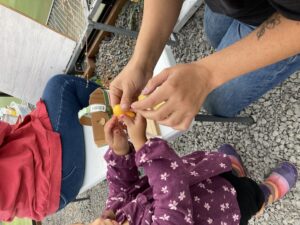
Nestled in Tyendinaga Mohawk Territory, the Kenhté:ke Seed Sanctuary and Learning Centre (KSSLC) is a living legacy where seed relatives are honoured and Indigenous youth reconnect with ancestral knowledge. Operated by Ratinenhayénthos in partnership with SeedChange and other local groups, KSSLC preserves Haudenosaunee planting traditions and ensures healthy seeds for future generations.
With FG Foundation funding, KSSLC has expanded its reach through hands-on workshops and mentorship programs where youth, elders, and community members engage in seed keeping, food cultivation, and cultural practices. These programs foster learning, healing, and intergenerational knowledge sharing.
The FG Foundation’s support has been key to growing KSSLC’s educational programming, heritage seed distribution, and community initiatives, helping ensure Haudenosaunee knowledge and cultural resilience continue to thrive.
Sucker Creek First Nation
With the FG Foundation’s funding, Sucker Creek First Nation is revitalizing its cultural identity and addressing the lasting impacts of residential schools through its Reclaiming Our Identity initiative. This transformative project is fostering healing, language revitalization, and cultural reconnection for the Nation’s 2,941 members.
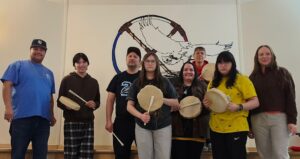
The program offers Cree language classes at various proficiency levels, land-based teachings on traditional practices such as harvesting and storytelling, and workshops for drum-making, rites of passage, and regalia-making. Elders play a central role in sharing knowledge and hosting healing ceremonies, including sweat lodges, night lodges, and pipe ceremonies.
Reclaiming Our Identity provides in-person and virtual programming, ensuring accessibility for on- and off-reserve members, including residential school survivors and intergenerationally impacted individuals. The initiative connects Sucker Creek’s youth to their heritage, fostering resilience through cultural practices and providing a safe space for healing and sobriety.
Aunties on the Road
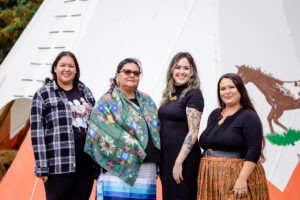
In the heart of the Ottawa-Gatineau urban Indigenous community, Aunties on the Road: Indigenous Full Spectrum Doula Collective is reclaiming traditional Auntie roles through doula care. Thanks to funding from the Future Generations Foundation, the Collective, which is a Grassroots Youth Led Organization supported by Minwaashin Lodge Women’s Support Center has expanded its ability to provide no-cost, full-spectrum doula services to First Nations, Métis, and Inuit families, across sexual and reproductive health outcomes.
The funding has allowed the Collective to increase hours for part-time doulas, thereby enhancing its capacity to offer more comprehensive and continuous care. With a trauma-informed approach rooted in Indigenous culture, the Collective helps community members navigate significant life transitions by offering culturally safe support throughout the full spectrum of reproductive experiences.
This initiative exemplifies the power of culturally responsive care in urban Indigenous communities, fostering healing and resilience through the traditional wisdom of the Aunties.
Alberta Native Friendship Centres Association
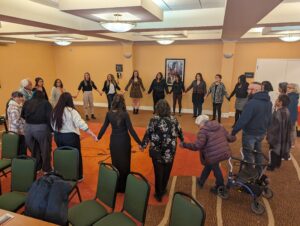
The Alberta Native Friendship Centres Association’s (ANFCA) visionary initiative, “Indigenous Youth Rise Up,” stands as a testament to the transformative power of collaboration and empowerment. ANFCA’s program embodies a commitment to fostering leadership and reconciliation among urban Indigenous youth across Alberta.
At the heart of “Indigenous Youth Rise Up” lies a profound recognition of Indigenous youth as the torchbearers of tomorrow, entrusted with the responsibility to shape the future in accordance with the Truth and Reconciliation Commission (TRC) Calls to Action and the United Nations Declaration on the Rights of Indigenous Peoples (UNDRIP). Guided by the wisdom of ANFCA Elders Wisdom Circle members, and survivors of residential schools, the program facilitates a dialogue of reconciliation and action, igniting a spark of change within the hearts and minds of Indigenous youth.
Through a series of immersive experiences, including in-person reconciliation discussions and virtual gatherings, ANFCA empowers youth to delve into the complexities of reconciliation, Indigenous governance, and civic engagement. Multigenerational learning opportunities with Elders and Knowledge Keepers enrich these discussions, infusing them with Indigenous wisdom and survivor perspectives, thus nurturing a deep understanding of TRC and UNDRIP principles.
“Indigenous Youth Rise Up” empowers its participants to reclaim their heritage and stride confidently toward a future imbued with hope and possibility. Through the steadfast support of the Future Generations Foundation, ANFCA’s program exemplifies a beacon of resilience, empowerment, and reconciliation for Indigenous communities across Alberta and beyond.
The Syilx Language House
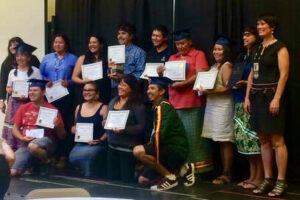
In the heart of Syilx territory, the Syilx Language House (SLH) is nurturing a resurgence of the Syilx language and culture through its Adult Fluency & Community Program. This innovative initiative, now in its third year of funding from the Future Generations Foundation, encompasses a range of activities aimed at fostering fluency, community engagement, and cultural preservation.
Building upon eight years of successful language fluency efforts, SLH staff are immersed in delivering sequenced language instruction to learners. Through intense study sessions, participants delve into the complexities of the Salish Curriculum, with a focus on achieving intermediate proficiency by June 2024. Despite past challenges posed by the COVID pandemic, SLH has adapted its approach, leveraging technology to expand its reach and recruit highly skilled students.
As a cornerstone of the program, SLH diligently collects and shares elder recordings, serving as a source of advanced literature for language and culture learners. These recordings are meticulously archived, transcribed, and freely shared online, contributing to the preservation of traditional knowledge and fostering a deeper understanding of Syilx heritage.
SLH extends its impact beyond the classroom through a variety of community programs catering to both children and adults. From daycare language games to evening classes for adults, SLH is dedicated to creating inclusive and accessible language education opportunities for all members of the community.
As SLH empowers learners to become ambassadors of the Syilx language and culture, it is sowing the seeds of a vibrant and resilient future for the Sylix people.